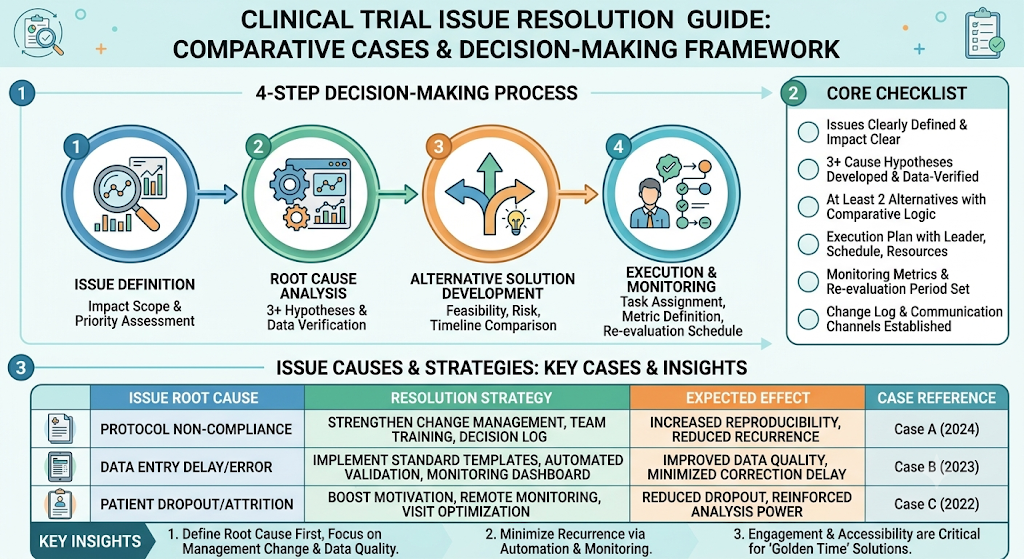
In the bio and healthcare industries, a clinical trial is the ultimate hurdle that determines a product’s market success. However, when preparing for a trial, failing to clearly understand the distinct differences in cost structures and timelines based on your product category can easily derail your budget planning and cause critical project delays.
Because regulatory agencies require completely different types of data for pharmaceuticals and medical devices, their underlying cost mechanisms diverge significantly. In this post, we will break down the core differences, analyze their distinct cost components, and provide a step-by-step practical guide to crafting a flawless budget strategy.
📌 Core Comparison Points
1. Target & Design
- Pharmaceuticals: These generally target large patient populations and rely on Randomized Controlled Trials (RCTs) as the gold standard to prove statistical efficacy. Long-term follow-up periods are essential to track drug metabolism and potential adverse effects within the human body.
- Medical Devices: These typically involve relatively smaller or field-centric patient cohorts compared to drugs. The core of the study design revolves around Usability Testing to evaluate how medical professionals or patients interact with the device in real-world clinical environments.
2. Regulatory Review
- Pharmaceuticals: Accumulating robust safety data is mandatory right from the Investigational New Drug (IND) application phase, moving through rigid, sequential multi-phase reviews (Phase 1 to Phase 3).
- Medical Devices: Requirements vary dramatically based on the device’s Risk Classification (Class). Reviews focus on verifying safety and performance data under actual clinical scenarios. If “substantial equivalence” to a predicate device is proven, clinical trials may be shortened or exempted entirely.
3. Data Characteristics
- Pharmaceuticals: Sponsors must accumulate extensive, high-precision safety data, including systemic biological side effects and long-term efficacy metrics.
- Medical Devices: The core data consists of functional performance indicators, user feedback, device malfunctions, and use-error risks.
4. Cost Flow
- Pharmaceuticals: Patient recruitment fees, multi-center operational costs, and continuous clinical monitoring/data management (EDC systems, etc.) swallow up the largest portion of the budget.
- Medical Devices: Budgets are primarily driven by clinical prototype manufacturing/iterative modifications, hospital installation setups, clinical staff training, and specialized usability testing agency fees.
📊 At-a-Glance Comparison Table
The following matrix summarizes how these two distinct clinical pathways diverge:
| Category | 💊 Pharmaceutical Clinical Trials | 🩺 Medical Device Clinical Trials |
| Scale & Timeline | Multi-center driven, large-scale patient cohorts, usually takes several years. | Small to medium-scale, usually takes several months to a few years. |
| Study Design Focus | Highly controlled environments focusing on randomization and control groups. | Driven by real-world context of use and usability; comparative controls used as needed. |
| Regulatory Direction | Strict accumulation of biological safety profiles via multi-phase licensing. | Validation of functional performance metrics and field-use scenario testing. |
| Primary Cost Drivers | Patient recruitment, clinical monitoring, data management, and GMP manufacturing. | Prototype design/modification, field installation, clinical training, and usability metrics. |
| Risk Focus | Biological and systemic safety, toxicities, and long-term therapeutic efficacy. | Physical/mechanical failures, device malfunctions, and field use-error mitigation. |
🏢 Real-World Scenarios: Understanding the Field Dynamics
Scenario 1: Pharmaceutical Trial (New Drug Candidate)
In a typical small-molecule or biologic trial, recruiting thousands of patients generates astronomical costs for Multi-Center operations and Contract Research Organization (CRO) monitoring. Additionally, because patients must be tracked over extended periods, Pharmacovigilance (safety monitoring) expenses continuously accumulate throughout the trial lifecycle.
Scenario 2: Medical Device Trial (Surgical Equipment)
For a novel surgical device trial, the priority shifts from massive patient recruitment to hospital field setup, clinician training, and inevitable prototype optimization. Therefore, manufacturing quality control costs driven by iterative hardware/software modifications and hands-on site management form the backbone of the budget.
⚡ A Practitioner’s Guide to Risk Mitigation
To execute your budget successfully, you must control unexpected field variables. Ensure your team reviews these four critical risk points:
- Protocol Redesigns Due to Regulatory Shifts: Secure contingency funds to handle potential protocol amendments if regulatory guidelines change mid-trial.
- Data Quality and Security Upkeep: Secure adequate system validation budgets to prevent missing data or data integrity breaches.
- Supply Chain and Site Operations: Maintain a financial buffer for potential shipping delays of clinical trial materials or investigational products.
- Subject Safety & Site Staff Training: Allocate resources for rigorous site training to minimize data contamination caused by investigator unfamiliarity with the protocol or device.
🛠️ Step-by-Step Clinical Budgeting Checklist
Follow these 5 distinct steps to build a bulletproof clinical budget and stabilize your company’s cash flow:
- Define the Final Objective: Clarify whether the trial’s primary goal is regulatory clearance, market expansion, or reimbursement tracking.
- Calculate Based on Design: Estimate the necessary manpower and infrastructure requirements tailored to your specific sample size and site count.
- Itemize Specific Costs: Breakdown line items for recruitment, QA/manufacturing, electronic data capture (EDC), site logistics, and specialized clinical training.
- Allocate a Contingency Buffer: Leave a 10% to 20% margin of your total budget to account for unexpected timeline delays or protocol modifications.
- Align with Project Milestones: Link your budget release to primary clinical milestones (e.g., IRB Approval, FPFV, LPLV) and set routine financial review intervals.
🎯 Conclusion & Next Steps
While pharmaceutical and medical device clinical trials share the same ultimate destination—market commercialization—the pathways they walk and the parameters they manage are fundamentally different. Recognizing these distinctions and embedding them into your early financial modeling is the only way to safeguard your timeline and safely cross the industry’s “Death Valley”.
Are you currently facing roadblocks while mapping out the budget or protocol design for your next pipeline?
👉 Try using an optimized clinical trial simulation tool tailored to your product type today . If you need assistance, we can provide a customized clinical architecture and cost-estimation checklist built specifically around your pipeline’s unique characteristics.
Feel free to leave your thoughts or questions in the comments below!
Tags: #ClinicalTrials #PharmaVsMedicalDevice #CostComparison #RegulatoryStrategy #BudgetPlanning