In the fast-paced world of clinical trials, managing SUSAR (Suspected Unexpected Serious Adverse Reaction) is not just a regulatory obligation—it is the absolute core of patient safety and project compliance.
However, even for veteran clinical trial operations teams, a slight delay in reporting, minor inconsistencies in records, or tangled communication channels can instantly turn into a massive ‘audit risk’.
Today, we will dive into how you can transform these high-stress, complex SUSAR management procedures into a streamlined, high-efficiency system using digital tools and automation, complete with a practical checklist you can print out and use immediately! By standardizing data and automating workflows, your team can save immense time and effort while significantly boosting data accuracy and transparency.
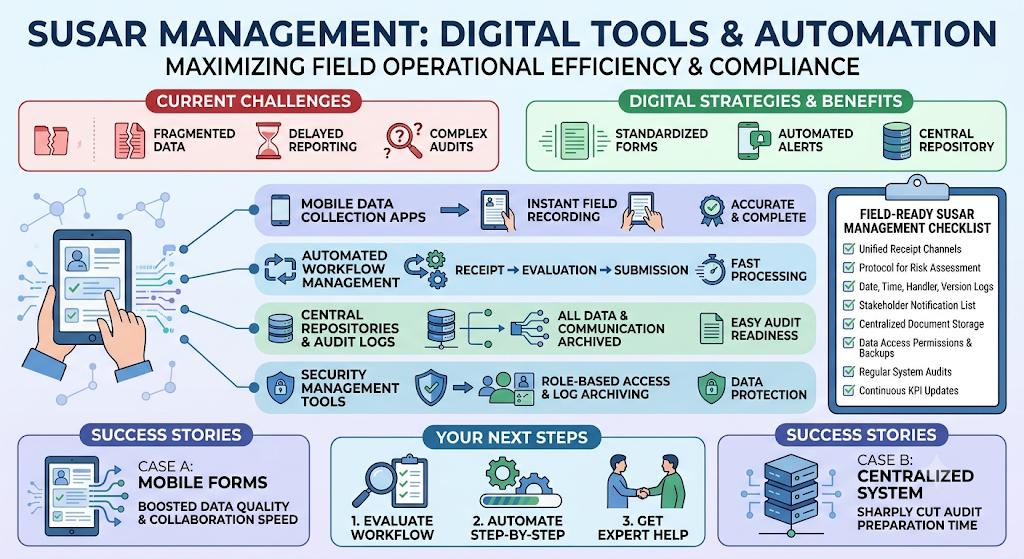
⚠️ 4 Major Field Challenges vs. 💡 Smart Solutions
Here are the four most common roadblocks clinical sites face during SUSAR management, alongside the smart digital strategies to break through them:
- Problem 1. Inconsistency in Field Data (Degraded Quality)
- Strategy: Adopt standardized digital forms to unify data entry formats across all sites.
- Problem 2. Delays in Reporting and Initial Evaluations
- Strategy: Build real-time conditional notifications and automated workflows to eliminate processing bottlenecks.
- Problem 3. Fragmented Record Management (Nightmare for Audit Readiness)
- Strategy: Establish a centralized repository where all historical data, communications, and documents live.
- Problem 4. Delayed Decision-Making Due to Communication Gaps
- Strategy: Utilize system-integrated automatic alerts and role-based access management to create a transparent, agile collaboration environment.
🔒 Note: Implementing access control and conducting regular training sessions are critical to simultaneously fortifying data security and team operational capabilities.
🛠️ Transforming SUSAR Management: Key Digital Toolkit
Combining the right digital tools tailored to your specific site requirements will dramatically accelerate your processing speeds and reinforce data reliability.
| Tool Type | Practical Site Application | ✨ Expected Benefits |
| Mobile Data Collection Apps | Instant on-site recording right when an event occurs | Boosts record accuracy, minimizes missing info |
| Automated Alerts & Workflow Management | Automatically transitions: Receipt ➡️ Initial Evaluation ➡️ Submission | Speeds up processing times, clarifies decision-making paths |
| Centralized Repositories & Audit Logs | Archives every document and communication thread with timestamping | Simplifies audit readiness, ensures data reproducibility |
| Security Management Tools | Role-based access configuration, automated log archiving | Satisfies strict compliance mandates, safeguards sensitive data |
📌 💡 Editor’s Tip: No matter how incredible a digital tool is, it is only effective if the field team actually uses it. Continuous system audits and ongoing user training must run in parallel to ensure the long-term synergy of your digital tools.
📋 [Field-Ready] The Essential SUSAR Management Checklist
When establishing or monitoring your safety reporting workflows, go through this checklist to ensure everything is operating flawlessly:
- [ ] Receipt Stage: Are the report receipt channels fully unified, and can the minimum required data be verified immediately?
- [ ] Evaluation Stage: Is the protocol for initial risk classification and reproducibility assessment crystal clear?
- [ ] Recording Stage: Do all records systematically log the date, time, handler, and version history in real-time?
- [ ] Communication Stage: Is the stakeholder notification list perfectly updated, and are all critical decisions documented?
- [ ] Storage Stage: Are all relevant files and their corresponding versions securely consolidated into a central database?
- [ ] Security Stage: Are the protocols for access permissions, backup intervals, and log retention durations strictly adhered to?
- [ ] System Health Check: Do you run periodic tests to confirm the automated workflows are executing properly and reflecting system updates?
- [ ] Continuous Optimization: Are key performance indicators (KPIs) reviewed regularly alongside field feedback to drive process improvements?
🔍 Real-World Success Stories (Case Studies)
See how clinical trial sites solved their biggest operational headaches by embracing digital transformation:
📱 Case 1: Site Implementation A (Transitioning to Mobile Forms)
- The Switch: A site completely abandoned manual paper entries and scattered emails in favor of integrated mobile forms.
- The Result: The reliability of field data skyrocketed, and the collaboration and data-sharing speeds between clinical sites and the sponsor headquarters improved dramatically.
🗄️ Case 2: Site Implementation B (Centralized Storage & Auto-Alerts)
- The Switch: This team archived their entire process workflow into a single hub and mapped out automated notifications for every key phase.
- The Result: When regulatory or sponsor audits occurred, preparation and response times were drastically cut down, while the quality and compliance of final regulatory submissions improved substantially.
🚀 Next Steps for Practical Implementation (CTA)
There is no reason to delay optimizing your clinical trial safety workflows. Secure your trial and elevate your field efficiency today!
- Evaluate Your Current Workflow: Use today’s ‘SUSAR Management Checklist’ to audit your current operating framework and locate any hidden compliance gaps.
- Automate Step-by-Step: Don’t feel pressured to overhaul your entire ecosystem overnight. Start small by introducing lightweight mobile intake forms or basic email workflow automations.
- Connect with Experts: Need a hand navigating the digitalization process? Drop a comment or reach out directly to grab customizable sample templates and personalized tool recommendations! It is the fastest, most reliable path to mastering both operational agility and airtight regulatory compliance.
#SUSAR #DigitalTools #Automation #FieldEfficiency #Checklist #ClinicalTrials #AdverseEvents #ClinicalOperations #CRAs