Hello! When navigating the bio and medical device business, the largest and most critical milestone is undoubtedly the clinical trial.
However, if you don’t understand the fundamental differences in how pharmaceutical and medical device clinical trials operate, your budgeting can easily fall apart, or your timeline can face indefinite delays. Today, we will break down the core differences, cost structures, and step-by-step practical tips for building a foolproof budget.
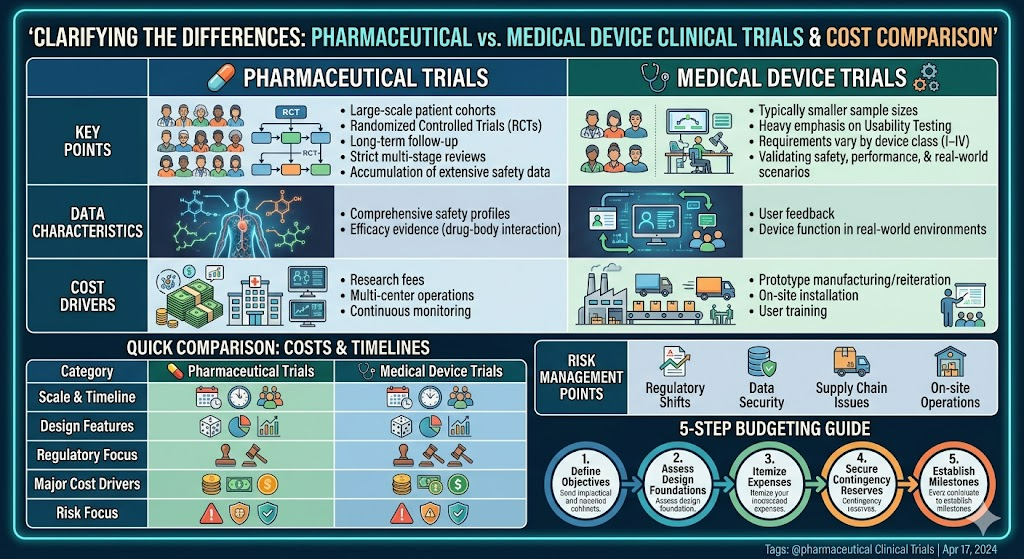
💡 Pharmaceuticals vs. Medical Devices: What’s the Difference?
Because these two types of trials evaluate fundamentally different subjects, their core approaches vary significantly:
- Subject and Design
- Pharmaceuticals: Generally require large-scale patient cohorts and Randomized Controlled Trials (RCTs) with long-term follow-up periods.
- Medical Devices: Typically involve smaller sample sizes and place a heavy emphasis on Usability Testing within actual clinical settings.
- Regulation and Review
- Pharmaceuticals: Subject to strict multi-stage reviews, where the continuous accumulation of extensive safety data is mandatory.
- Medical Devices: Requirements vary drastically depending on the device class (Class I–IV). The focus is primarily on validating safety, performance, and real-world clinical scenarios.
- Data Characteristics
- Pharmaceuticals: Focus on accumulating comprehensive safety profiles and efficacy evidence regarding how the drug interacts with the human body.
- Medical Devices: The core data centers around user feedback and how well the device functions when operated by medical staff or patients in real-world environments.
- Cost Drivers
- Pharmaceuticals: Research fees, multi-center operations, and continuous monitoring eat up the largest portion of the budget.
- Medical Devices: Prototype manufacturing/reiteration, on-site installation, and user training make up a significant portion of the expenses.
📊 Quick Comparison: Costs and Timelines
Here is a direct look at how the two fields compare across key metrics:
| Category | 💊 Pharmaceutical Trials | 🩺 Medical Device Trials |
| Scale & Timeline | Multi-center focused; spans several years | Small to medium scale; spans several months to years |
| Design Features | Randomization and control groups are standard | Focus on usability and real-world environments |
| Regulatory Focus | Rigorous safety data accumulation & approval | Safety/performance validation & scenario-based testing |
| Major Cost Drivers | Patient recruitment, monitoring, data management, GMP | Prototype iteration, on-site setup, clinician training |
| Risk Focus | Long-term safety and establishing efficacy evidence | Usability risks, on-site technical glitches, and support |
🏢 Real-World Scenario Comparison
Case 1: Pharma Company A (New Drug Development)
Because they need to recruit a massive pool of subjects, their patient recruitment and multi-center operational costs across various university hospitals quickly scale into millions of dollars. As the long-term follow-up progresses, monitoring and data management costs snowball over time.
Case 2: Medical Device Company B (Innovative Device Development)
While the number of patients is smaller compared to the pharma trial, they face frequent expenses from modifying and improving prototypes based on direct feedback from surgeons. Additionally, shipping, securely installing equipment in operating rooms, and training clinical staff represent their primary financial bottlenecks.
⚠️ Often Overlooked ‘Risk Management’ Points in Budgeting
Clinical trial budgets most frequently miss the mark due to unforeseen variables. Make sure to factor the following four elements into your contingency reserves:
- Regulatory Shifts: The potential need for timeline and protocol redesigns based on sudden regulatory agency requests.
- Data Security: Heightened data privacy and security costs to protect patient information and integrity.
- Supply Chain Issues: Disruption or delays in sourcing investigational drugs or specialized medical device components.
- On-site Operations: Project delays resulting from adverse events or a lack of proper training for on-site staff.
🛠️ 5-Step Practical Guide to Successful Budgeting
To ensure a smooth clinical trial, your budget should be built systematically using these steps:
- Step 1 [Define Objectives]: Clearly establish the clinical trial’s ultimate goal (e.g., regulatory approval, marketing data) and success metrics.
- Step 2 [Assess Design Foundations]: Estimate the necessary personnel and infrastructure costs based on the study design (number of subjects, duration, and trial sites).
- Step 3 [Itemize Expenses]: Break down specific cost centers including patient recruitment, manufacturing/quality control, data management, on-site operations, and training.
- Step 4 [Secure Contingency Reserves]: Always set aside a dedicated percentage of the total budget as a contingency fund to buffer against timeline delays or sudden variables.
- Step 5 [Establish Milestones]: Allocate the budget across key developmental phases and set regular review intervals to strictly monitor cash flow.
🎯 Final Thoughts
While pharmaceutical and medical device clinical trials might look similar on the surface, where the money goes and how risks are managed are worlds apart. Understanding the unique financial architecture of your specific field is the only way to hit your milestones without running into sudden cash crunches.
#CostComparison #TimelineManagement #RiskManagement #Budgeting #ClinicalTrials